What do servo motor fault codes actually mean?
A servo motor fault code is essentially the drive telling you that something in a tightly controlled motion system has moved outside its safe operating limits. That system is always balancing electrical demand, mechanical load and feedback from an encoder in real time, so when something goes wrong, the fault you see is usually just the end result of a chain of events rather than the original cause. Think of it like a car’s dashboard warning light, but more precise: each code corresponds to a particular fault condition.
For example, a motor might report an overcurrent fault, but the real issue could be a seized bearing increasing mechanical resistance, a poorly tuned control loop demanding too much torque, or even a wiring issue causing unstable feedback.
On a Siemens drive, a code might indicate a specific encoder fault, while on a Mitsubishi Electric servo, the same issue will have a completely different code.
This is why servo faults are rarely straightforward.
Why are faults so difficult to diagnose?
The system is closed-loop, meaning it constantly corrects itself based on feedback. A small mechanical issue can look like an electrical one, a feedback problem can appear as a positioning error, and one fault can easily trigger another before the system shuts down. By the time the alarm appears, you’re often looking at a symptom rather than the initiating fault, and that makes diagnosis more about interpretation than simple cause-and-effect.
What are the risks of leaving a servo fault unaddressed?
If that underlying issue is ignored, the system usually doesn’t improve - it degrades. What starts as an intermittent alarm can turn into overheating, loss of positioning accuracy, or repeated shutdowns. In more severe cases it can damage the motor windings, the drive electronics, or mechanical components like couplings and bearings. There’s also a safety dimension because servo systems control motion precisely; if that control becomes unstable, the machine may behave unpredictably, which is why drives are designed to stop operation when something looks wrong.
What should I do when a fault code appears?
In practice, when a fault appears on-site, the most effective approach is to slow everything down and think in terms of system behaviour rather than just the code. You first capture what the machine was doing at the moment of failure, because context often matters more than the alarm itself. From there, you look for obvious external causes like loose connections, overheating, or recent changes in load or settings, and then you mentally separate whether the issue is likely electrical, mechanical, or related to feedback.
Mechanical resistance tends to show up as increased current or overload-type behaviour, feedback issues often appear as unstable positioning or intermittent faults and power or wiring issues tend to be more erratic or timing-related. The key step is recognising patterns - whether the fault happens at a specific speed, position, or load condition because that usually points you toward the root cause faster than the fault code alone.
How can a professional servo motor assessment from Alpha Electrics help?
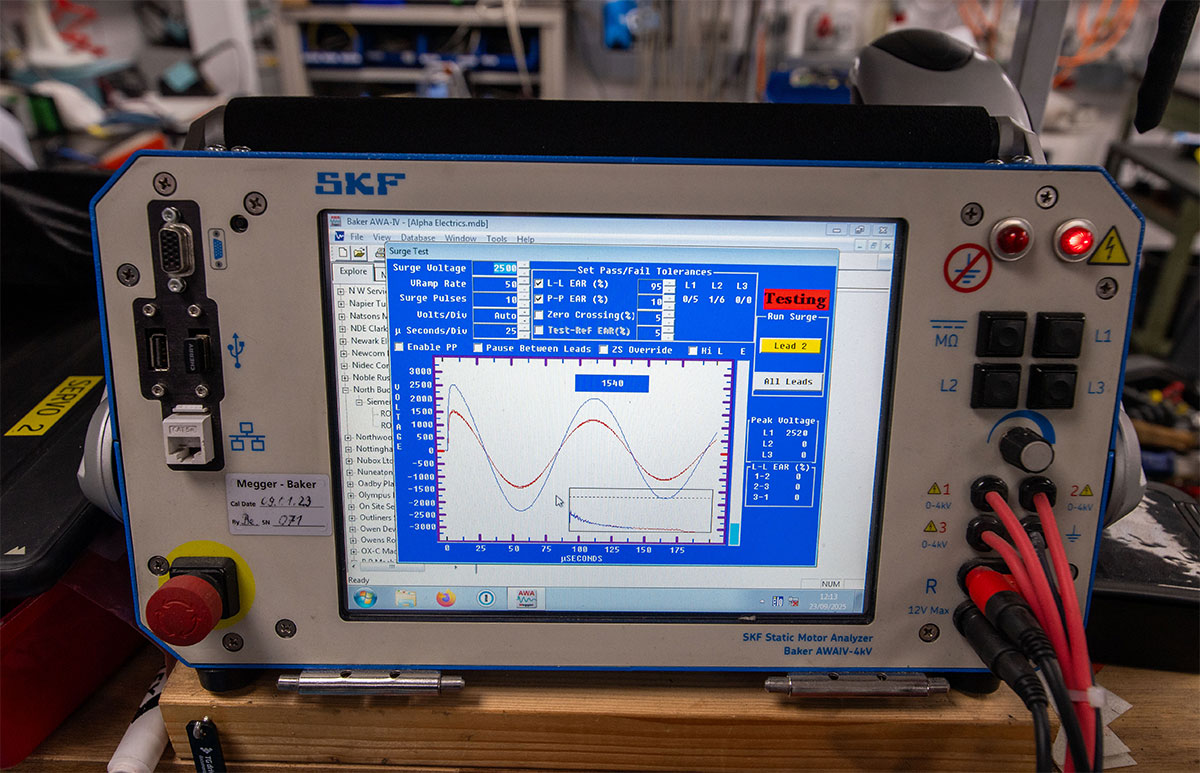
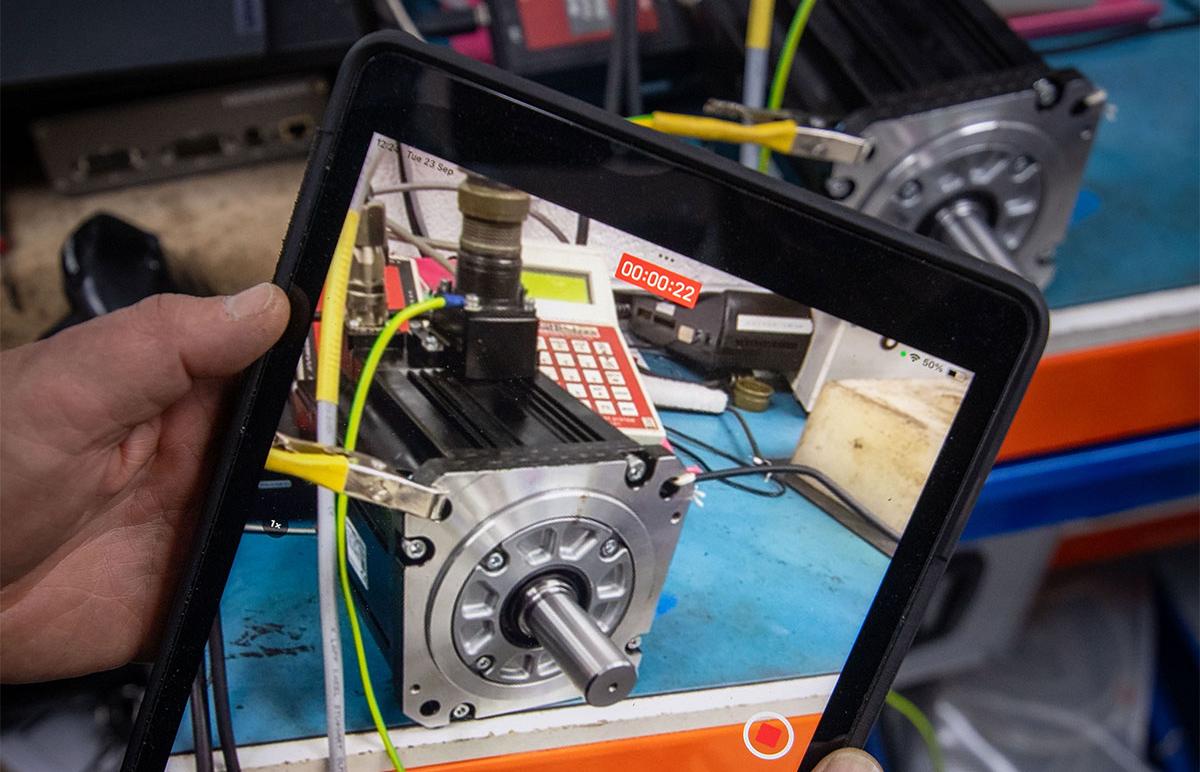
With 35 years of experience Alpha Electrics is best placed to give a professional servo assessment building on exactly this way of thinking but in a more structured and evidence-driven way. Instead of reacting to a single fault, the engineer looks at the entire system: electrical supply stability, feedback signal quality, mechanical load behaviour, and how the drive is tuned. They then test the system under controlled conditions to see how it behaves dynamically, not just when it fails. The goal isn’t simply to clear the fault, but to explain why the system reached that state in the first place and whether the underlying conditions are still present.
So, in simple terms, a servo fault code is not the problem itself - it’s a signal that the system has already detected instability. The real work is always in tracing backwards through the interacting mechanical, electrical, and control factors that led to it, because that’s where the actual fault lives.
Alpha Electrics is a trusted partner for more than 4,000 companies in the food, retail aerospace and manufacturing sectors. For your assessment and to keep your business on track call 0116 276 8686.